Manila to Marinduque: Your Easy Travel Guide
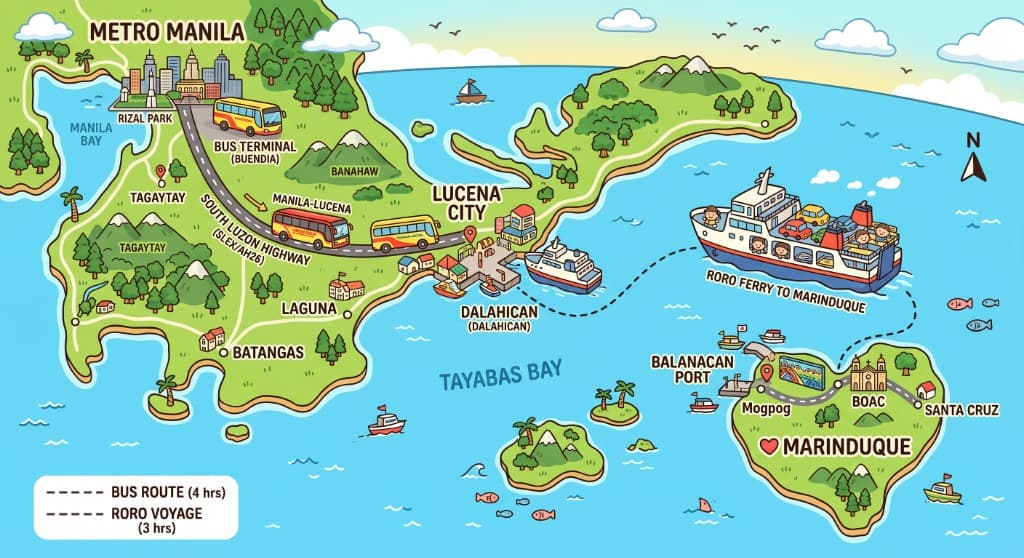
Dreaming of Marinduque's beaches, rich history, and the vibrant Moriones Festival? Getting to this heart-shaped island province from Manila is an enjoyable trip that usually combines land and sea. This guide walks you through how to get to Marinduque from Manila, covering the most common routes, key travel times, and practical tips so you can plan with confidence.
Overview of Travel Options to Marinduque
Marinduque, located south of Luzon, is commonly reached via Batangas Port. The most used options are:
- Bus from Manila to Batangas Port, then ferry to Marinduque
- Driving your own car to Batangas Port, then taking a roll-on/roll-off (RoRo) ferry
Total travel time, including transfers and waiting, typically runs from about 8 to 12 hours, depending on traffic, schedules, and sea conditions. The sections below break down each step so this Marinduque travel guide can help you decide how to go to Marinduque in a way that fits your budget and style.
Option 1: Bus and Ferry from Manila (Most Common)
This is the most budget-friendly and straightforward method for most travelers. It involves:
- Bus from Metro Manila to Batangas Port
- Ferry from Batangas Port to one of Marinduque’s ports
- Local transport from the port to your town or resort
Step 1: Getting to Batangas Port from Manila
Start at a provincial bus terminal in Metro Manila and ride a bus bound for Batangas Pier (Batangas Port).
Typical departure areas in Metro Manila:
- Cubao, Quezon City: Terminals here serve travelers from northern and eastern Metro Manila.
- Buendia / Pasay (near LRT Taft): Good for those coming from Makati, Pasay, or southern parts of the metro.
- Alabang / Muntinlupa: Useful if you’re coming from Cavite, Laguna, or southern Metro Manila.
Bus companies commonly serving Batangas Port (names can change over time, but often include):
- JAM Liner
- DLTB Co.
- Other provincial bus lines with “Batangas Pier/Port” signage
Fare and travel time (Manila to Batangas):
- Air-conditioned bus fares are usually in the range of typical Manila–Batangas provincial trips, and may be slightly higher during peak seasons.
- Travel time is often around 2.5 to 4 hours, depending mainly on Metro Manila traffic and how many stops the bus makes.
Buses to Batangas Port typically leave frequently throughout the day. When possible, aim for an early-morning departure to have more ferry options.
Tip: Make sure the bus signage specifically says “Batangas Pier/Port” so you are dropped at the port terminal, not just Batangas City proper.
Step 2: Ferry from Batangas Port to Marinduque
At Batangas Port, proceed to the terminal area for ticketing and boarding. Ferries serve several Marinduque ports:
- Balanacan Port (Mogpog): The most commonly used port, with good onward connections to other towns.
- Cawit Port (Boac): Convenient if you’re staying in or near Boac, the capital.
- Other ports such as Gasan may also be used, depending on the ferry company and season.
Ferry operators on the Batangas–Marinduque route typically include:
- StarLite Ferries
- Montenegro Shipping Lines
- Island Water or similar operators, including fast craft on some schedules
Schedules and booking:
- Departure times and frequencies vary by company and season, and can change due to weather or operational reasons.
- Early morning and daytime trips are common; some companies operate multiple trips daily in busier periods.
- Always check the latest Batangas to Marinduque ferry schedule directly via the ferry company’s website, social pages, or hotline before your trip.
- During Holy Week, Christmas, and long weekends, pre-booking is strongly advised as trips can sell out.
Fares and travel time (Batangas to Marinduque):
- Passenger fares depend on the company, vessel type (regular RoRo vs. fast craft), and seat/class.
- As a rough guide, one-way fares are typically in the mid-hundreds of pesos range for standard economy/tourist classes, with discounts for children, seniors, and persons with disabilities per Philippine law.
- Travel time generally runs from about 2.5 to 5 hours, depending on:
- Which Marinduque port you’re heading to
- Whether you’re on a regular RoRo or a faster vessel
- Sea and weather conditions
Tip: Arrive at Batangas Port at least 1–2 hours before your desired departure, especially in peak season, to allow time for ticketing, terminal fees, and security checks.
Step 3: From Marinduque Port to Your Destination
Once you arrive at your Marinduque port (often Balanacan), you’ll see local transport options waiting outside the terminal.
Common options include:
- UV Express vans: For inter-town travel (e.g., port to Boac, Gasan, Santa Cruz, Torrijos). Fares depend on distance but are usually affordable.
- Jeepneys: Serve standard routes between municipalities and barangays.
- Tricycles: Ideal for shorter rides, such as from the port to your lodging or within town. Always agree on the fare before you ride.
Many resorts and accommodations can arrange pickup in advance, which is especially handy if you’re arriving in the evening or with large luggage.
Option 2: Driving Your Private Car to Marinduque
If you want maximum flexibility, you can bring your own vehicle from Manila to Marinduque via RoRo. This is popular with families or groups carrying a lot of gear.
Driving from Manila to Batangas Port
- From Metro Manila, take SLEX (South Luzon Expressway) southbound, then continue onto STAR Tollway toward Batangas City.
- Follow signs for Batangas Port / Batangas Pier.
- Depending on your starting point and traffic, expect around 2 to 3 hours of driving time in normal conditions, plus time spent in toll plazas and near the port.
Have enough cash or RFID load for tolls, and consider avoiding peak rush hours and holiday Fridays if you can.
Taking the RoRo Ferry
At Batangas Port, you’ll purchase:
- A vehicle ticket (based on vehicle type and length)
- Passenger tickets for each person traveling (unless your chosen operator packages the driver’s fare with the vehicle—always confirm)
Key points:
- Vehicle fares vary by operator and vehicle size (motorcycle vs sedan vs van/SUV).
- Advance booking is strongly recommended during peak periods because vehicle slots are limited.
- Arrive at the port 2–3 hours before departure to allow for ticketing, inspections, and queuing.
- Port staff will inspect registration documents (OR/CR) and direct you into the proper lane.
- Once on board, you’ll park as instructed, engage the handbrake, and then proceed to the passenger deck for the rest of the crossing.
Driving time on the island is the same regardless of whether you came via RoRo or as a foot passenger. The main circumferential road around Marinduque is generally paved, with smaller roads leading to specific barangays and attractions.
Pros of bringing your own vehicle:
- Full control over your schedule and stops
- Easier access to remote beaches and trailheads
- More convenient if you’re traveling as a group or with bulky gear
Cons:
- Higher total cost (fuel, tolls, vehicle RoRo fare)
- More planning required for booking and port procedures
Alternative Routes & Important Travel Considerations
Flights and Indirect Routes
Marinduque has a small airport near Gasan, but direct commercial flights from Manila have not always been consistently available. Flight offerings can start, pause, or change depending on airline operations.
While some travelers consider:
- Flying to nearby provinces (e.g., Mindoro or Bicol)
- Then combining other sea and land legs
these routes are typically more complex and not as practical as the straightforward Manila–Batangas–Marinduque route for most visitors. For simplicity and cost, bus + ferry (or car + RoRo) remains the recommended way how to get to Marinduque from Manila.
Weather, Sea Conditions, and Safety
- The Philippines experiences a rainy/typhoon season, generally around June to November. Strong weather can cause ferry delays or cancellations.
- Even in fair weather, sea conditions can sometimes be choppy. If you are prone to motion sickness, bring seasickness medication or remedies.
- Always monitor weather forecasts and check ferry advisories close to your travel dates. Build some flexibility into your schedule if you are traveling during the wet season.
Best Time to Travel
- Dry season (roughly December to May): Generally the most reliable for calmer seas and clear skies—ideal for island hopping and beach trips.
- Holy Week (Moriones Festival): A unique time to visit but also the busiest. Expect heavy demand for buses, ferries, and rooms. Book everything well ahead.
- Off-peak months: Outside major holidays and festival weeks, you’ll encounter fewer crowds and may enjoy a more relaxed vibe and easier bookings.
Essential Tips for a Smooth Marinduque Journey
To keep your Manila to Marinduque trip as easy as possible, keep these in mind:
- Check current schedules: Treat all sample times as guides only. Always verify up-to-date bus and Batangas to Marinduque ferry schedule via official channels.
- Travel early in the day: Leaving Manila in the early morning gives you more ferry options and a buffer for traffic or delays.
- Book ahead in peak season: For Holy Week, long weekends, Christmas, and summer, reserve ferry tickets and accommodations as early as you can.
- Pack smart: Bring light layers, a waterproof bag for valuables, snacks, drinking water, and any medication you may need (especially for motion sickness).
- Keep IDs and documents handy: Have a valid ID, your booking references, and any necessary vehicle papers ready for ticketing and port checks.
- Coordinate with your hotel or homestay: Ask about the best port to arrive at, current local transport options, and whether they can arrange pickup.
Once you’ve made it from Manila to Marinduque, you’ll have an excellent base for exploring the island’s tourist spots, food, and culture. If you’d like, the next step can be weaving in internal links from this guide to your “tourist spots,” “food,” and “ultimate island guide” posts so readers naturally continue deeper into your site.